Cultivating Sustainable Food & Farming Transformations
Consortium for Agroecological Transformations (CAT) is dedicated to guiding India’s 40 million farmers’ agroecological transformations towards a sustainable and just food system by 2030.
ABOUT US
The Consortium for Agroecological Transformations (CAT) is a dynamic force aimed at integrating, scaling, and popularising agroecology across India.
By uniting stakeholders for collaborative action, CAT envisions a transformative journey for the nation’s agricultural landscape. Our goal is to tackle pressing challenges like climate change, nutritional insecurity, farmer debt, biodiversity loss, and resource degradation. Through a united effort, we aim to facilitate a substantial shift toward agroecology-driven farming practices that further fair and equitable food systems, benefiting all stakeholders, from growers to consumers.
OUR VISION
Envisioning an India where agroecological and sustainable farming systems flourish, fostering social justice, food sovereignty, self-reliance and economic aspirations for farmers, with a commitment to provide nutritious, diverse, safe and healthy foods to consumers.
CAT aims to transform Indian agriculture by putting farmers at the centre, using a landscape-level approach. We want to build sustained support through collaboration. Our vision includes:
Unifying Stakeholder Support
Unified Vision: Gather diverse stakeholders with a shared goal, approach and agreed-upon measures of success.
Inclusive Dialogue: Facilitate open discussions to ensure everyone agrees on the overall mission.
Establishing a Collaborative Governance Framework
Inclusive Decision-Making: Create a system where everyone actively participates, defining responsibilities.
Transparency: Make decision-making processes transparent to build trust and accountability.
Tracking Progress Effectively
Common Metrics: Develop shared metrics to track progress on national and state levels.
Real-time Monitoring: Use technology for timely updates on achievements and challenges.
Unifying Stakeholder Support
Unified Vision: Gather diverse stakeholders with a shared goal, approach and agreed-upon measures of success.
Inclusive Dialogue: Facilitate open discussions to ensure everyone agrees on the overall mission.
Establishing a Collaborative Governance Framework
Inclusive Decision-Making: Create a system where everyone actively participates, defining responsibilities.
Transparency: Make decision-making processes transparent to build trust and accountability.
Tracking Progress
Effectively
Common Metrics: Develop shared metrics to track progress on national and state levels.
Real-time Monitoring: Use technology for timely updates on achievements and challenges.
OUR STRUCTURE
Strengthening Action through Coordination
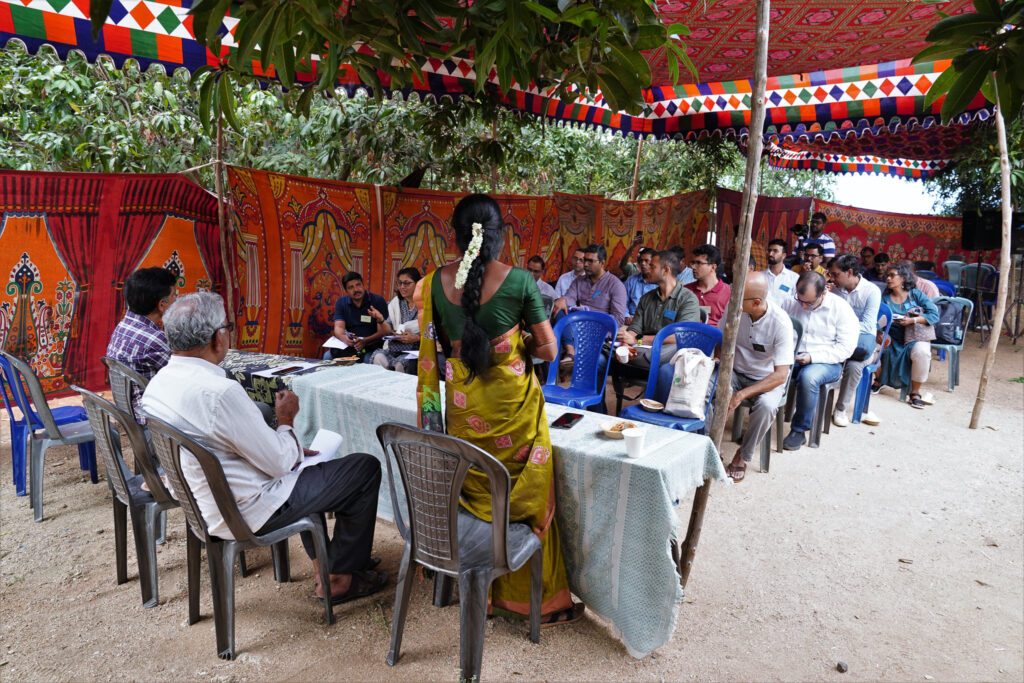
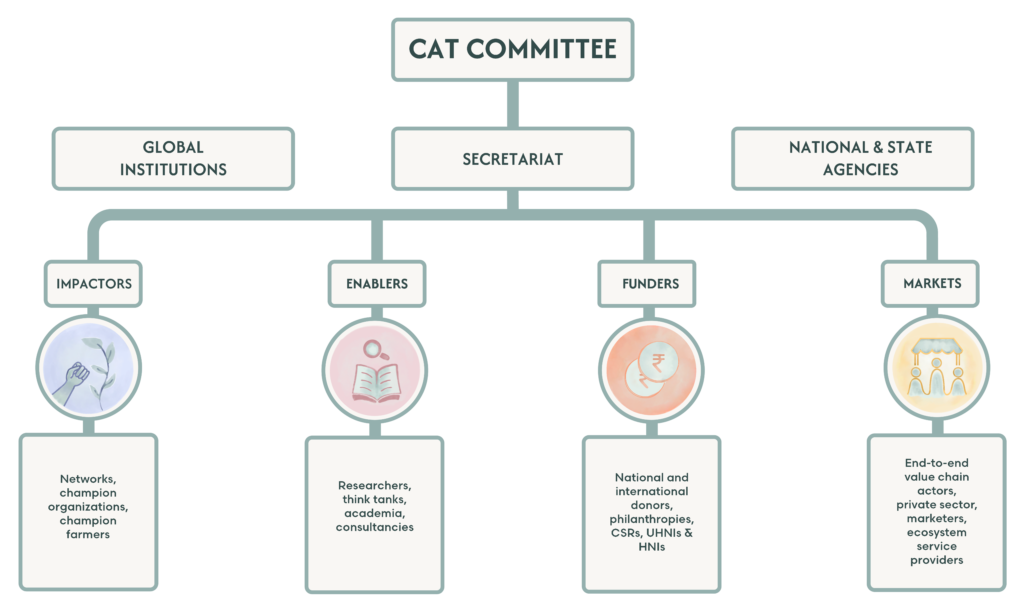
Acting as an ecosystem orchestrator, CAT brings together key stakeholders, including domestic and international funders, civil society organisations, farmer groups, public agencies, and research institutions, to collaboratively advance agroecological transitions. These actors work in coordination across four key stakeholder groups: funders, enablers, impacters, and market players.
CAT aims to be inclusive and engage stakeholders from the private sector and government agencies. A Working Group facilitates efficient decision-making, supported by a dedicated secretariat. At the core of CAT’s work is the development of a landscape-based approach to agroecological transformations. This process is led by the Landscape Design Committee, a group of agroecology experts responsible for defining the landscape approach, setting selection criteria, appointing consultants, and coordinating landscape reports with expert inputs.
CAT also collaborates actively with government and non-government initiatives and networks, such as the National Mission for Natural Farming (NMNF), the Working Group for Indo-German Lighthouse on Agroecology and NRM, Regenerative and Agroecological Food Systems Transitions (RAFT), the Coalition for Food Systems Transformation in India (CoFTI) and National Coalition of Natural Farming (NCNF), to align efforts toward shared goals.
OUR APPROACH
Empowering Farmers: Building Stronger Communities, Landscape by Landscape
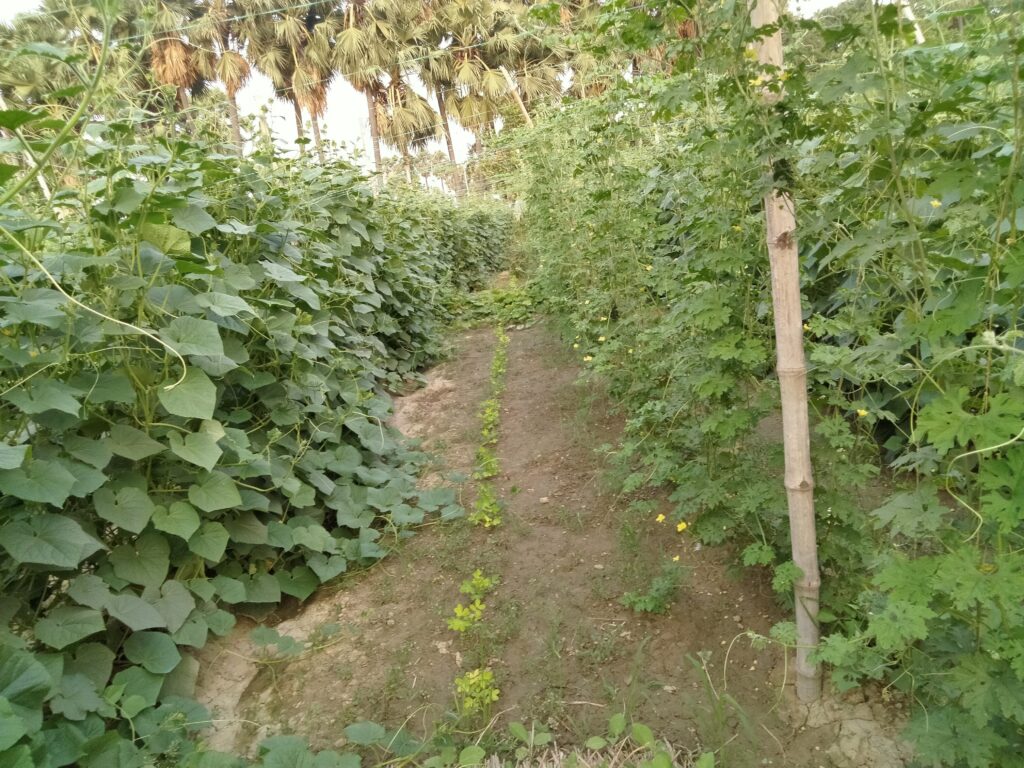
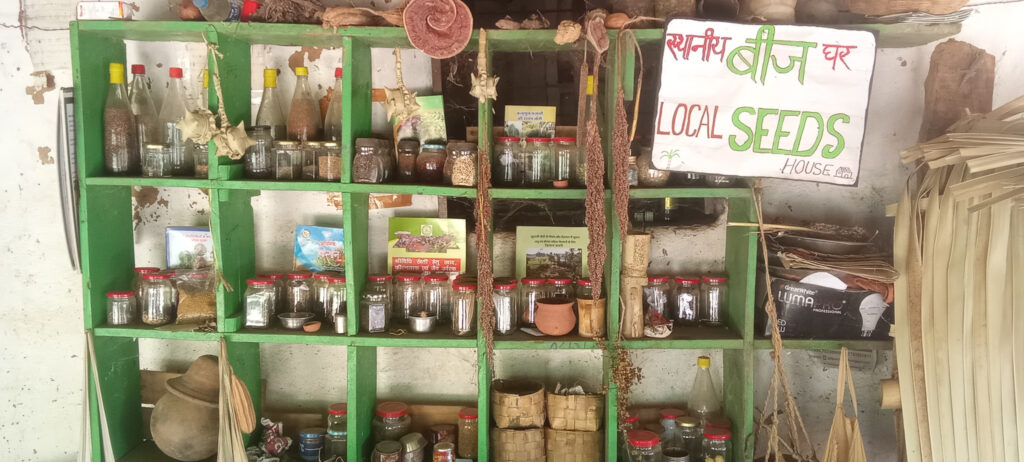
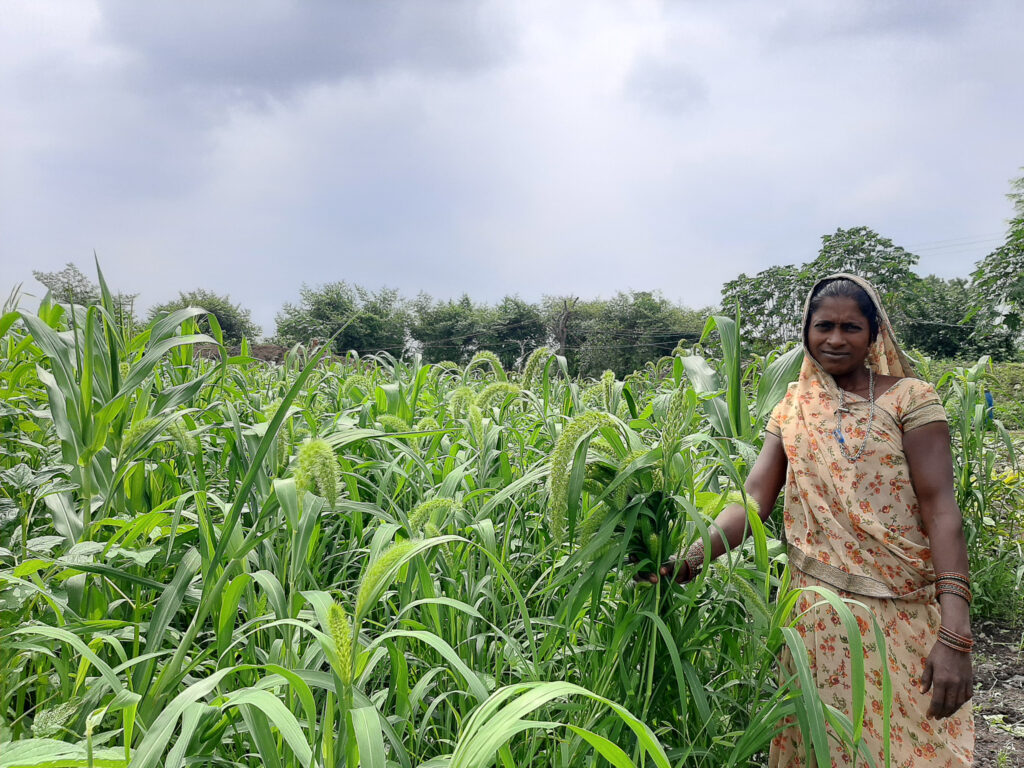
We are putting farmers at the heart of our efforts, focusing on landscape-based approaches. Through this approach, we aim to support all the services and agencies necessary for large-scale agroecological change over a period of at least ten years. This means working together with our stakeholder groups and ensuring sustained, long-term availability of resources.
We have started by creating high-level investment and implementation plans for 10 landscapes, each of which is a block as an administrative unit and has been chosen based on specific criteria.
From this, a common framework for agroecological transformation will emerge.
OUR LEVERS
Samaj, Sarkar, Bazar: Drivers of Change for Agroecology
Catalysing Grassroots Adoption
Change begins at the community level. The transition at the field/farm level towards the uptake of agroecology must occur through enthusiastic civil society organisations, motivated communities, and the agreement of related stakeholders in the landscape, while nurturing this through sustained finance, which includes public funds, community contributions, and catalytic funding and investment through blended finance models.
Reorienting Policy
A policy push would initiate wider, systems-level change in agroecology. Government schemes and resources must support agroecological initiatives in a landscape, such as sustainable seed systems, bio-input production, value-chain development, and local market strengthening, given the significant economic, social, and environmental impacts of these initiatives. CAT’s approach will propose practical pathways for repurposing existing mechanisms, such as the Minimum Support Price (MSP), Public Distribution System (PDS), Mid-Day Meal schemes, MGNREGA, and subsidies for fertilisers and energy, to better align with agroecological objectives. By demonstrating models of resource convergence at the landscape scale, CAT seeks to provide actionable examples that can guide policy shifts and systemic reforms across Indian agriculture.
Building Markets
Increased consumer demand for chemical-free food serves as a feedback mechanism for strengthening agroecological production systems. CAT’s approach views consumer awareness about the long-term health impacts of pesticides, harmful chemicals and GMOs as a critical aspect of creating this demand. Market development for agroecological products requires building consumer trust and confidence to shift market dynamics, and then capture larger shares for producers to sell chemical-free, nutritious produce.
Catalysing Grassroots Adoption
Change begins at the community level. The transition at the field/farm level towards the uptake of agroecology must occur through enthusiastic civil society organisations, motivated communities, and the agreement of related stakeholders in the landscape, while nurturing this through sustained finance, which includes public funds, community contributions, and catalytic funding and investment through blended finance models.
Reorienting Policy
A policy push would initiate wider, systems-level change in agroecology. Government schemes and resources must support agroecological initiatives in a landscape, such as sustainable seed systems, bio-input production, value-chain development, and local market strengthening, given the significant economic, social, and environmental impacts of these initiatives. CAT’s approach will propose practical pathways for repurposing existing mechanisms, such as the Minimum Support Price (MSP), Public Distribution System (PDS), Mid-Day Meal schemes, MGNREGA, and subsidies for fertilisers and energy, to better align with agroecological objectives. By demonstrating models of resource convergence at the landscape scale, CAT seeks to provide actionable examples that can guide policy shifts and systemic reforms across Indian agriculture.
Building Markets
Increased consumer demand for chemical-free food serves as a feedback mechanism for strengthening agroecological production systems. CAT’s approach views consumer awareness about the long-term health impacts of pesticides, harmful chemicals and GMOs as a critical aspect of creating this demand. Market development for agroecological products requires building consumer trust and confidence to shift market dynamics, and then capture larger shares for producers to sell chemical-free, nutritious produce.
OUR STAKEHOLDERS
CAT has created a space built on mutual respect and trust for its stakeholders, who are grouped into Impactors, Enablers, Funders, and Market Players within the agroecology field.
IMPACTORS
Impactors are the architects of change, comprising networks, champion organisations, and individuals working directly with communities. Their efforts, supported by other stakeholders, drive tangible and sustainable results through on-ground initiatives.
CAT: Declaration (Work in progress)
ENABLERS
Enablers, including researchers, think tanks, consultancies, support organisations, governments, and thought leaders, form the backbone of CAT. They contribute to ground-level efforts and collaboration, focusing on developing and deploying Monitoring and Evaluation (M&E) frameworks for agroecology. Enablers customise approaches based on evidence, ensuring the transformative impact of agroecology is measured accurately and refined.
CAT: Declaration (Work in progress)

FUNDERS
Funders play a crucial role in driving transformation by reflecting on long-term outcomes and directing funds towards innovation and capacity building in agroecology. They avoid duplication of efforts, leverage funds, and engage diverse donor groups to propel agroecological initiatives forward.
CAT: Declaration (Work in progress)
MARKET PLAYERS
Market Players further innovate and bridge gaps in the agroecology sector, connecting consumers to Farmers’ Producer Organisations (FPOs), organic stores, and entrepreneurs. They facilitate cross-sectional partnerships and empower consumers to make informed and sustainable choices while linking financial institutions to agroecological investments.
CAT: Declaration (Work in progress)
IMPACTORS
Impactors are the architects of change, comprising networks, champion organisations, and individuals working directly with communities. Their efforts, supported by other stakeholders, drive tangible and sustainable results through on-ground initiatives.
CAT: Declaration (Work in progress)
ENABLERS
Enablers, including researchers, think tanks, consultancies, support organisations, governments, and thought leaders, form the backbone of CAT. They contribute to ground-level efforts and collaboration, focusing on developing and deploying Monitoring and Evaluation (M&E) frameworks for agroecology. Enablers customise approaches based on evidence, ensuring the transformative impact of agroecology is measured accurately and refined.
CAT: Declaration (Work in progress)
FUNDERS
Funders play a crucial role in driving transformation by reflecting on long-term outcomes and directing funds towards innovation and capacity building in agroecology. They avoid duplication of efforts, leverage funds, and engage diverse donor groups to propel agroecological initiatives forward.
CAT: Declaration (Work in progress)
MARKET PLAYERS
Market Players further innovate and bridge gaps in the agroecology sector, connecting consumers to Farmers’ Producer Organisations (FPOs), organic stores, and entrepreneurs. They facilitate cross-sectional partnerships and empower consumers to make informed and sustainable choices while linking financial institutions to agroecological investments.
CAT: Declaration (Work in progress)

CAT WORKING GROUP
RESOURCES
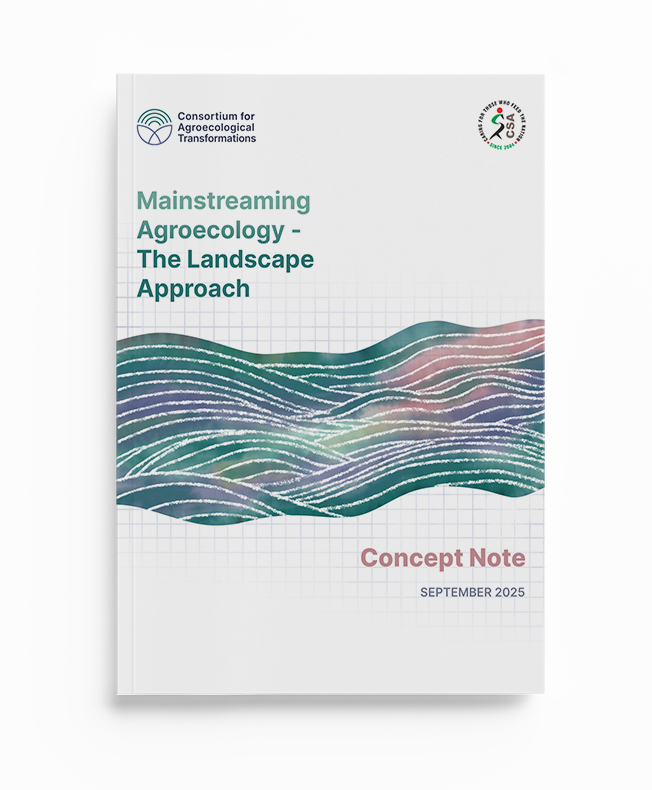
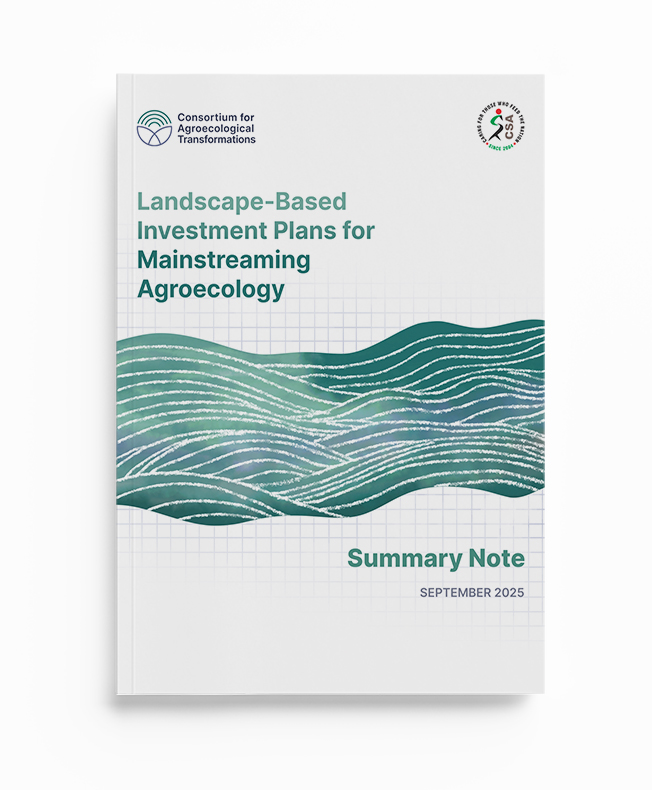
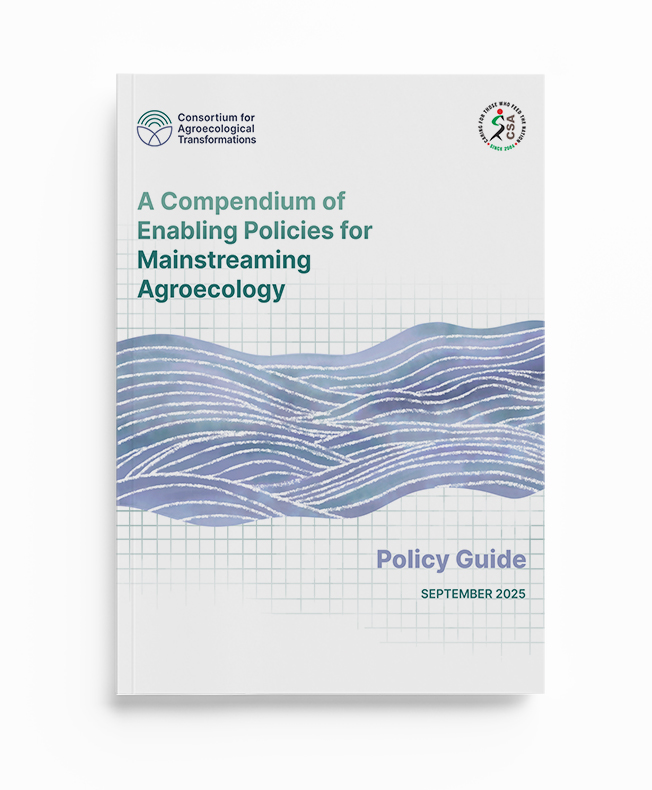
These resources are CAT’s knowledge products that dive into CAT’s groundbreaking strategy for agroecological transformations. These documents outline our ten-year vision to bring systems-level change in our food systems. The concept note lays forth our foundational ideology – the landscape approach, the summary note presents an overview of strategic intervention planning across three diverse landscapes in India: Ahwa (Gujarat), Chitrakonda (Odisha), and Dantewada (Chhattisgarh) – forming a precursor to detailed landscape investment plans, and the policy compendium lays out a diverse selection of enabling policies for mainstreaming agroecology at the landscape level. In this reimagination of bringing systemic change, these resources will guide our actions to concentrate public and private resources in a focused and collaborative way to bring these transformations at the system level.

RESOURCES
Charter
CAT’s mission is to catalyse and coordinate transformative agroecological processes in India. These processes encompass evidence building, policy discussions and implementation, knowledge management and sharing, capacity building for all stakeholders, efficient resource mobilisation and allocation, and the development and dissemination of successful models and approaches.
The charter provided is a starting point, subject to evolution through nationwide discussions with key stakeholders.
Read our charter here.
Blueprint
Our Blueprint for scaling agroecological transformation in India is a plan to change the way farming is done in the country. With agroecology-based farming, it aims to fix problems such as low farmer incomes, environmental degradation, biodiversity loss, etc.
Indian agriculture is in trouble because it costs more to grow crops, and the soil isn’t as good as it used to be. Agroecology can help by improving the climate, improving soil health, and strengthening farming communities.
Read our detailed plan here.
Concept Note
The transition to agroecology has begun, with various stakeholders like CSOs, governments, scientists, private sector, donors, and farmers’ movements supporting its adoption. Programmes like the Andhra Pradesh Community Managed Natural Farming (APCNF) and the Odisha Millets Mission show successful efforts at significant scales.
However, achieving widespread adoption and mainstreaming remains challenging. Currently, only 1.6% of agricultural land is under organic cultivation. Agroecological interventions are fragmented and often lack sustained, comprehensive, long-term support for farmers and their value chains. Read our concept note to learn more about the future of agroecological transformations in India.
Read our concept note here.
Agroecology Tracker
The Agroecology Tracker is envisioned as an openly accessible online platform that tracks and monitors initiatives related to Agroecology and Natural Farming at a cluster level. The platform will enable the continuous collection of real-time data, offering valuable insights, identifying service gaps, and facilitating the planning and design of required interventions. The data collected on the platform will be accessible to implementers, funders, policymakers and other ecosystem stakeholders.
Read about the tracker here.
CONTACT US
For inquiries and collaboration opportunities, reach out to Vibhusha Gupta at programmes@agroecological.creativewebo.in.
Stay connected as we work together for a sustainable and transformative agroecological future.
CONTACT US
For inquiries and collaboration opportunities, reach out to Vibhusha Gupta at programmes@agroecological.creativewebo.in.
Stay connected as we work together for a sustainable and transformative agroecological future.
OUR COMMITMENT TO THE SDGs
CAT: Transforming Agriculture, Transforming Lives
We approach agroecology holistically: Connecting people, planet, and prosperity. This is our contribution and commitment to the Sustainable Development Goals.